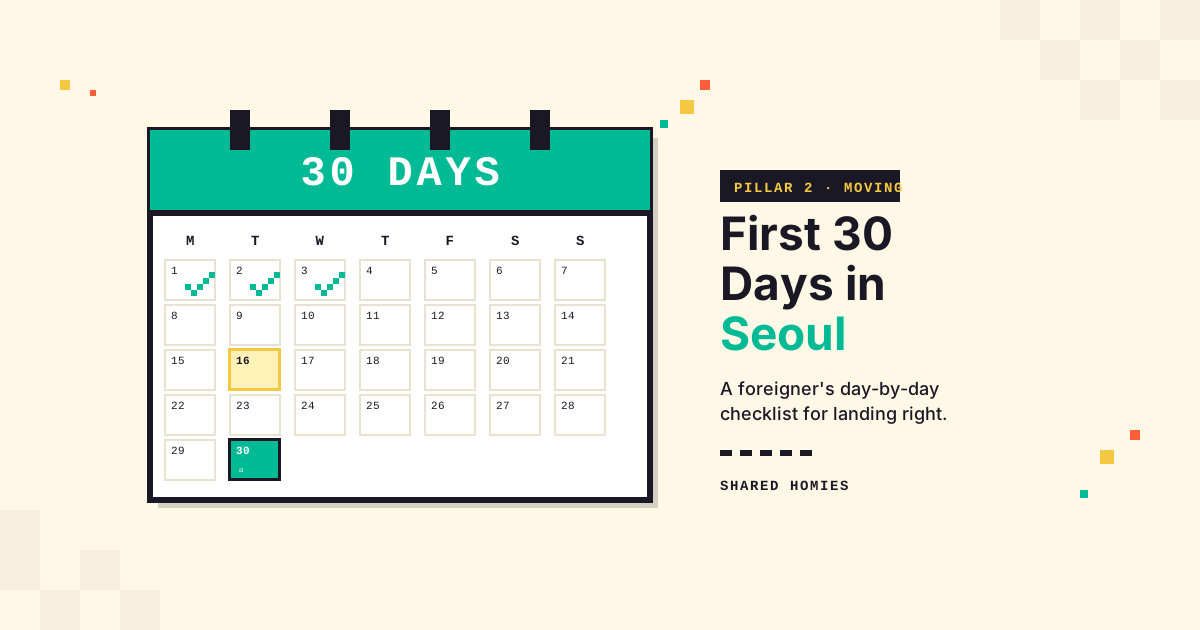
Vos 30 premiers jours à Séoul : checklist jour par jour pour étrangers

The Shared Homies Team
Shared Homies
Publié le 28 avril 2026 · Dernière mise à jour 28 avril 2026
TL;DR
- Réservez votre logement avant d'atterrir — le trouver à l'arrivée gâche votre première semaine.
- Procurez-vous une SIM prépayée coréenne dans les 3 premiers jours pour les vérifications SMS.
- Déposez votre demande d'ARC en semaine 2–3 ; les cartes arrivent 4–6 semaines plus tard.
- Banque, NHIS et cours de coréen s'enchaînent en semaines 3–4, une fois votre adresse stabilisée.
- Budget réaliste pour le mois un : ₩3 M–5 M hors vols et dépôts de location.
Frequently asked questions
Plan for ₩3,000,000–5,000,000 covering one month of housing (₩1.2M–2.5M for co-living or a serviced apartment), SIM activation, T-money transit, groceries, the ARC application fee (₩30,000), and a buffer for gym, hagwon, or social. This excludes the flight in and any deposit if you're signing a long-term direct lease — those are separate from month one.
Yes. Every other task — ARC application, bank account, NHIS enrollment, even an embassy registration — depends on having a fixed Seoul address. Foreigners who land without booked housing typically lose 5–10 days bouncing between short stays while viewing long-term places, miss their ARC application window, and sign whatever apartment is available instead of what they want. Book at least 30 days of co-living, a serviced apartment, or a monthly stay before you board.
Standard ARC processing in Seoul runs 4–6 weeks but can stretch to 8 weeks during peak intake months (March, September). Request an ARC application receipt at your appointment — it serves as interim ID for some banking and contract situations. Healthcare enrollment, postpaid SIM upgrades, and full Korean banking apps wait until the physical card arrives.
Several banks let foreigners open a basic passport-only account at flagship branches with foreigner-services desks (KEB Hana, Woori, Shinhan, KB Kookmin). Toss Bank and KakaoBank generally require an ARC. Visit a branch in Myeongdong, Itaewon, or near a major university — those staff handle foreigner paperwork daily and usually have English-speaking tellers. Bring your passport, visa, address proof from your housing, and ₩50,000 for the initial deposit.
Long-stay foreigners are required to enroll in NHIS after six months of residence in Korea, per the National Health Insurance Service. ARC plus address proof are needed at the local NHIS branch. For foreigners not on an employer-paid plan, monthly premiums are tiered by reported income — see the [NHIS foreigner subscriber portal](https://www.nhis.or.kr/english/wbheaa02000m01.do) for current tier amounts. Most month-one arrivals defer this paperwork to month two.
Only if you have your ARC. Korea Immigration Integration Program enrollment runs through HiKorea and requires a valid ARC plus the social-integration program prerequisites. If you're committed to learning Korean from week one, paid hagwon programs (Yonsei KLI, Sogang KLI, Ganada Korean) accept passport-only enrollment and start every quarter. Most foreigners begin paid classes in month one and switch to KIIP once their ARC unlocks it.
Trying to solve housing on arrival. The second-biggest is over-scheduling social events while still jet-lagged and operationally swamped. Land with housing booked, sleep through the first 48 hours, and treat week one as logistics-only. Push social calendar to week three when your apps, money, address, and ARC paperwork are stable. Foreigners who burn through energy in week one tend to skip weeks two and three entirely.
Postpaid contracts with KT, SK Telecom, and LG U+ require an ARC plus Korean credit history (or a deposit waiver). Realistic timing: weeks 6–8 after the ARC arrives. Until then, prepaid plans (KT M Mobile, EG SIM, U+ MVNOs) at ₩30,000–60,000/month for unlimited data work passport-only. The full eSIM-to-prepaid-to-postpaid sequence is in our [Apps and eSIM stack guide for Seoul](/blog/navigating-seoul-solo-apps-esim-foreigner).

The Shared Homies Team
Shared Homies
A team of foreigners and Koreans operating shared homes across Seoul. We write what we learn from running a co-living business for international tenants.
Related reading
International Student Housing in Seoul: Your 2026 Options, Costs, and What Actually Works
Dormitories, share houses, gosiwon, officetel — here's the realistic breakdown of Seoul student housing for international students, exchange students, and language learners.
5 min de lecture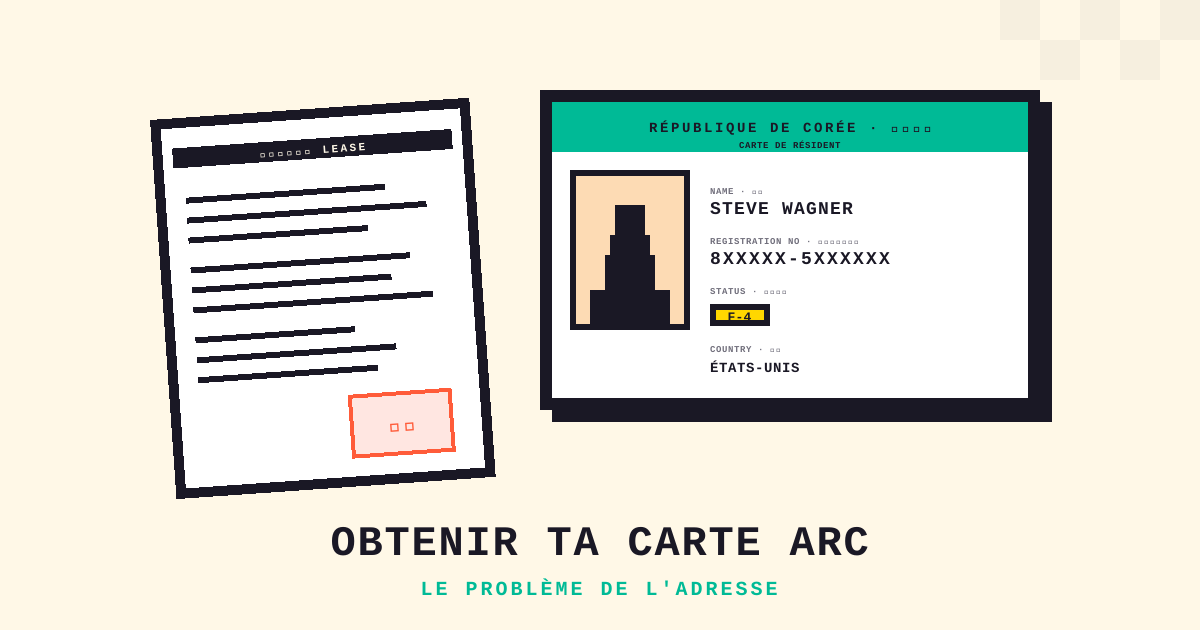
How to Get Your Korean ARC: The Address Problem and What Actually Works
The ARC unlocks every Korean bureaucracy step. The catch: you need a residential address before you can apply. Here's how foreigners actually get one.
10 min de lecture