The Full Cost of Renting in Seoul as a Foreigner: Co-living vs Direct Landlord vs Airbnb vs Gosiwon vs Serviced Apartment

- Monthly rent is rarely the biggest cost; setup and friction dominate.
- Deposit opportunity cost adds ~4% per year of capital tied up.
- Furnishing an empty Seoul studio runs ₩2M–5M before move-in.
- Co-living wins under 12 months; direct wolse wins past 18 months.
- Serviced apartments are 3–5× co-living rate but zero setup cost.
The most common foreigner-housing mistake in Seoul is comparing only monthly rent. A ₩600,000/month direct wolse / 월세 looks dramatically cheaper than a ₩1,000,000/month co-living room — until you add the ₩10,000,000 deposit (and its opportunity cost), the ₩2,000,000–5,000,000 to furnish the empty studio, the 2-year internet contract, the agent fee, the utility setup deposits, and the time cost of doing all of this in Korean. For stays under 12 months, the sticker price gap usually inverts. This guide walks through the true total cost of all five realistic housing options for foreigners — co-living, direct wolse, direct jeonse, officetel, gosiwon, and serviced apartment — across 6-month and 12-month stays.
What does each housing type actually cost upfront?
The first decision: how much capital you tie up before you even sleep there.
Table 1: Day-one cash requirement (single foreigner, central Seoul)
| Option | Deposit | Furnishing | Agent fee | Utility deposits | Total day-one cash | First month rent due |
|---|---|---|---|---|---|---|
| Direct wolse / 월세 (officetel) | ₩10,000,000 | ₩1,500,000–3,000,000 | ~₩100,000 | ₩200,000 | ~₩12,000,000 | + ₩900,000 |
| Direct jeonse / 전세 (1-bed) | ₩100,000,000–300,000,000 | ₩1,500,000–3,000,000 | ~₩400,000–1,200,000 | ₩200,000 | ~₩102,000,000+ | ₩0 |
| Furnished officetel (relocation agency) | ₩5,000,000–10,000,000 | ₩0 | ₩300,000–500,000 | ₩0 (bundled) | ~₩6,000,000–11,000,000 | + ₩1,100,000 |
| Co-living (private room) | ₩0–1,000,000 (refundable, 1mo equivalent) | ₩0 | ₩0 | ₩0 | ~₩1,000,000 | + ₩900,000 |
| Serviced apartment | ₩0 | ₩0 | ₩0 | ₩0 | ₩0 (no deposit) | + ₩3,500,000 |
| Gosiwon / 고시원 | ₩0 | ₩0 | ₩0 | ₩0 | ₩0 (no deposit) | + ₩450,000 |
Important read of this table: ₩0 day-one cash for serviced apartment and gosiwon does NOT mean they're cheap. It means there's no deposit and no setup overhead — but the first month's rent is still due, and that monthly rate is the entire cost structure. Serviced apartment at ₩3,500,000/month adds up fast; gosiwon at ₩450,000/month is just a low monthly rate to begin with. The "First month rent due" column is the actual cash you need on day one.
What exactly is a serviced apartment?
Serviced apartments are licensed hospitality operations — extended-stay hotels with kitchenettes, daily housekeeping, a front desk, and weekly/monthly billing. They operate under 숙박업 (lodging business) licenses, not residential rental licenses. Common brands cluster in Gangnam / 강남, Itaewon / 이태원, and Yongsan / 용산.
The key distinctions:
- vs Airbnb: Serviced apartments are licensed commercial hospitality. Airbnb is a residential property listed for short-term sublet, often in a regulatory gray area in Korea (most residential leases prohibit short-term subletting). Serviced apartments are legal and stable; Airbnb depends on the host's compliance.
- vs Co-living: Co-living is a residential rental contract for medium-stay tenants (1+ months). Serviced apartments are hotel-class with daily/weekly minimums.
- vs Hotel: Serviced apartments have kitchenettes, washer/dryer, and longer-stay pricing. Hotels are pure per-night with no kitchen.
The hospitality license is also the reason they don't help with ARC applications — see the next section.
Why does day-one cash matter so much?
Because most foreigners arrive on a 90-day visa-free entry or a fresh D-2 / D-10 / E-7 visa, without an ARC (외국인등록증), without a Korean bank account that can hold ₩10,000,000, and often without ₩10,000,000+ liquid in the first place. The four no-deposit options (co-living, furnished officetel, serviced apartment, gosiwon) exist specifically because direct-rental day-one cash is a wall most foreigners can't scale on day one. Where they differ from each other is in (a) monthly rate, (b) how long you can comfortably stay, and (c) whether they help you get the ARC paperwork that unlocks the rest of your Korean life.
Which options actually help you get an ARC?
This is the distinction most foreigners discover too late. The ARC application requires residential address documentation (a 임대차계약서 / rental contract or equivalent landlord/operator letter). What each option provides:
| Option | License type | Provides ARC documentation? |
|---|---|---|
| Direct wolse / jeonse | Residential 임대 | ✅ Standard rental contract |
| Officetel via agency | Residential 임대 | ✅ Standard rental contract |
| Co-living | Residential 임대 (typically) | ✅ Yes — most operators issue ARC-ready documentation |
| Serviced apartment | Hospitality 숙박업 | ❌ Generally no — wrong license type |
| Gosiwon / 고시원 | Hospitality 숙박업 | ❌ Generally no — wrong license type |
| Airbnb | Residential (host's risk) | ❌ Hosts almost never issue documentation |
This single distinction is why the foreigner-housing playbook isn't "pick the cheapest no-deposit option" — it's "pick the option that gets you onto the ARC track." Serviced apartments and gosiwon work as week 1 landing spots, but you'll need to move to a residential-lease option (co-living or direct rental) to apply for your ARC and unlock everything downstream. Co-living is the only no-deposit, no-Korean-required option that reliably issues ARC documentation — that's why it's the standard recommendation for foreigners staying 1+ months who plan to settle in any way.
What does each option cost over a 6-month stay?
For stays under a year, the right comparison is total cash outlay plus deposit opportunity cost — not "rent per month."
Table 2: 6-month total cost (single foreigner, central Seoul)
| Option | Deposit | Monthly rent | Utilities & Wi-Fi | Furniture amortized | Total 6-mo direct cost | + Opportunity cost on deposit | True 6-mo cost |
|---|---|---|---|---|---|---|---|
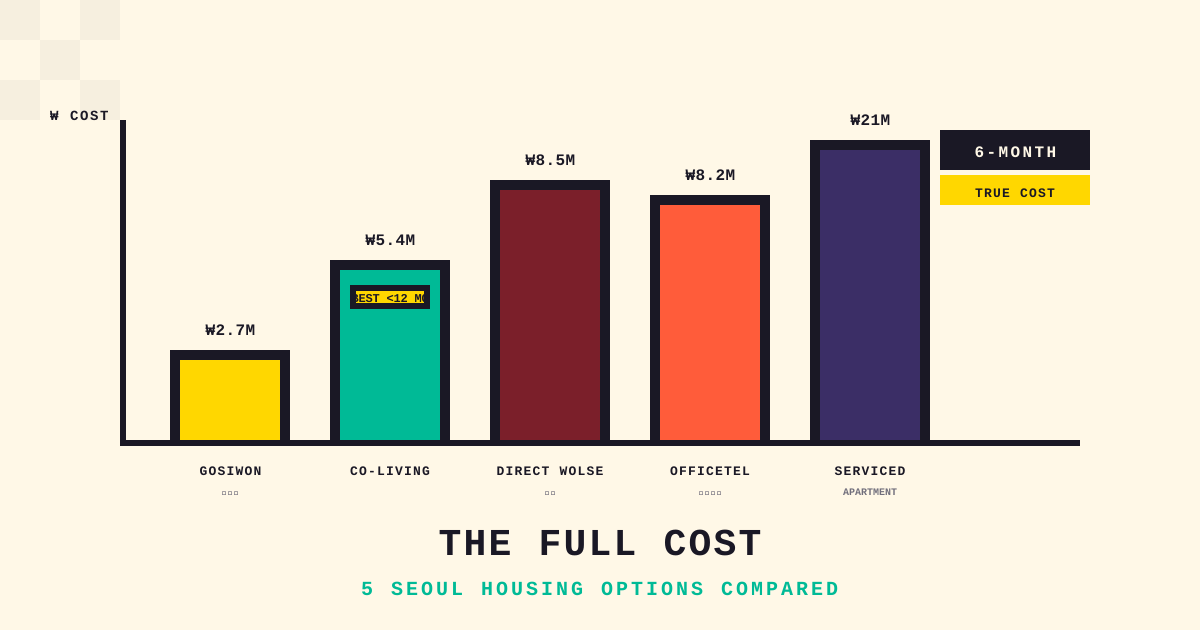
| Direct wolse | ₩10,000,000 (held) | ₩900,000 × 6 = ₩5,400,000 | ₩150,000 × 6 = ₩900,000 | ₩2,000,000 | ₩8,300,000 | + ₩200,000 | ~₩8,500,000 |
| Direct jeonse | ₩150,000,000 (held) | ₩0 | ₩900,000 | ₩2,000,000 | ₩2,900,000 | + ₩3,000,000 | ~₩5,900,000 |
| Furnished officetel | ₩10,000,000 (held) | ₩1,100,000 × 6 = ₩6,600,000 | ₩180,000 × 6 = ₩1,080,000 | ₩300,000 | ₩7,980,000 | + ₩200,000 | ~₩8,200,000 |
| Co-living | ₩900,000 (held) | ₩900,000 × 6 = ₩5,400,000 | included | included | ₩5,400,000 | + ₩18,000 | ~₩5,420,000 |
| Serviced apartment | ₩0 | ₩3,500,000 × 6 = ₩21,000,000 | included | included | ₩21,000,000 | ₩0 | ~₩21,000,000 |
| Gosiwon | ₩0 | ₩450,000 × 6 = ₩2,700,000 | included | included | ₩2,700,000 | ₩0 | ~₩2,700,000 |
Opportunity cost calculated at 4% annualized — see Bank of Korea base rate for current Korean rate context. Furniture amortization assumes you absorb the cost over 6 months even if you sell at end of stay (used furniture in Seoul typically resells at 30–50% of purchase).
What does the 6-month math tell you?
Three honest takeaways:
- Gosiwon is genuinely the cheapest legal option. ₩2.7M for 6 months. The catch is the 4–7㎡ room with shared bath. Some foreigners find this acceptable; many find it isolating after week 4.
- Co-living undercuts direct wolse for short stays. ~₩5.4M vs ~₩8.5M. The deposit opportunity cost + furnishing kills the wolse advantage at this stay length.
- Serviced apartment is 4× co-living. Only worth it for stays under 30 days or specific edge cases (corporate relocation paid by employer).
What does each option cost over a 12-month stay?
The math shifts at longer stays because setup costs amortize over more months.
Table 3: 12-month total cost (single foreigner, central Seoul)
| Option | Deposit | Monthly rent | Utilities & Wi-Fi | Furniture amortized | Total 12-mo direct cost | + Opportunity cost on deposit | True 12-mo cost |
|---|---|---|---|---|---|---|---|
| Direct wolse | ₩10,000,000 (held) | ₩900,000 × 12 = ₩10,800,000 | ₩150,000 × 12 = ₩1,800,000 | ₩2,000,000 | ₩14,600,000 | + ₩400,000 | ~₩15,000,000 |
| Direct jeonse | ₩150,000,000 (held) | ₩0 | ₩1,800,000 | ₩2,000,000 | ₩3,800,000 | + ₩6,000,000 | ~₩9,800,000 |
| Furnished officetel | ₩10,000,000 (held) | ₩1,100,000 × 12 = ₩13,200,000 | ₩180,000 × 12 = ₩2,160,000 | ₩300,000 | ₩15,660,000 | + ₩400,000 | ~₩16,060,000 |
| Co-living | ₩900,000 (held) | ₩900,000 × 12 = ₩10,800,000 | included | included | ₩10,800,000 | + ₩36,000 | ~₩10,836,000 |
| Serviced apartment | ₩0 | ₩3,500,000 × 12 = ₩42,000,000 | included | included | ₩42,000,000 | ₩0 | ~₩42,000,000 |
| Gosiwon | ₩0 | ₩450,000 × 12 = ₩5,400,000 | included | included | ₩5,400,000 | ₩0 | ~₩5,400,000 |
How does the 12-month math change the answer?
The crossover starts to appear:
- Direct wolse and co-living are now within ~30% of each other at the 12-month mark. The setup overhead amortizes far enough that direct wolse stops being penalized.
- Past 18 months, direct wolse decisively beats co-living because the ₩2M furnishing cost has fully amortized and the deposit opportunity cost is a smaller fraction of the total.
- Gosiwon stays cheapest at any duration but the lifestyle cost compounds — most foreigners can't sustain 4–7㎡ living past month 4–6.
- Jeonse only makes sense if you have ₩150M+ liquid AND plan to stay 24+ months AND can stomach the deposit fraud risk. For most foreigners in their first lease, no.
For the historical context on why jeonse vs wolse are structured the way they are, see Jeonse vs Wolse vs Key Money: How Korean Rentals Actually Work.
What hidden costs do foreigners typically miss?
The tables above include the obvious line items. The hidden costs are what tip the math against direct rentals more often than expected.
Table 4: Hidden cost categories by housing type
| Hidden cost | Direct wolse / jeonse | Officetel agency | Co-living | Serviced | Gosiwon |
|---|---|---|---|---|---|
| 2-year internet contract penalty if you break | ₩200,000–500,000 | None (bundled) | None | None | None |
| Utility activation deposits (gas, electric, water) | ₩100,000–300,000 | None | None | None | None |
| Used-furniture loss at exit (50% of purchase) | ₩1,000,000–2,500,000 | None | None | None | None |
| Move-out cleaning required by landlord | ₩100,000–300,000 | Sometimes | None | None | None |
| Translator / lawyer for contract review | ₩100,000–500,000 | None | None | None | None |
| Time cost of Korean bureaucracy (estimated 20–40 hours) | ₩X | Less | None | None | None |
The time cost is the one foreigners most often discount and most often regret. 20–40 hours of evening and weekend bureaucracy in a language you don't speak — phone calls to gas company, landlord disputes about a broken boiler, internet installation rescheduling — has a real cost even if it doesn't show up on a credit card statement.
For a deeper look at the DIY friction stack, see The Hidden Tax of DIY Rentals in Seoul.
When does each option actually make sense?
Strip away the per-line analysis and the decision pattern is straightforward.
Decision framework by stay length
- Under 30 days: serviced apartment or hotel + Airbnb. Don't try to set up infrastructure for a stay this short.
- 1–3 months: co-living or gosiwon. Co-living if you value comfort and community; gosiwon if cost is the only constraint.
- 3–6 months: co-living strongly preferred. Direct wolse setup overhead doesn't amortize at this length.
- 6–12 months: still co-living for most foreigners. Direct wolse only if you've already built ARC + Korean bank + guarantor or HUG eligibility.
- 12–18 months: the real decision zone. Direct wolse becomes cost-competitive. Stay in co-living if you value optionality (ability to switch neighborhoods) or aren't sure of total stay length.
- 18+ months with confirmed extension plans: direct wolse is decisively cheaper. Plan the graduation deliberately.
- 24+ months with ₩150M+ liquid and Korean banking history: jeonse becomes worth considering, with HUG insurance non-negotiable.
For the no-Korean / no-ARC / no-guarantor playbook that determines what's actually accessible at each stage, see Renting in Seoul Without Korean, Without an ARC, Without a Guarantor.
How should you make the call?
Three honest framings most foreigners settle on after 12 months in Korea:
- Optimize for total cost only if you're certain about stay length. Direct wolse is cheaper at 18+ months, dramatically more expensive at 6 months. Pick wrong and the savings invert.
- Optimize for optionality if you're uncertain. Co-living's monthly billing means you can leave with 30 days' notice. Direct wolse traps you in a 12-24 month lease where breaking early forfeits part of the deposit.
- Don't optimize for "real Korean apartment" identity. The most expensive mistake foreigners make is signing a direct wolse in month 4 to feel like a "real resident," then realizing in month 8 they want to move neighborhoods or extend their visa is uncertain.
For most foreigners in their first 12–18 months in Korea, co-living is the rational choice on cost-adjusted-for-friction terms. Past 18 months with stable visa and Korean banking history, direct wolse becomes the right tool. The right move isn't picking one housing type forever — it's matching the housing type to your current Korea-tenure stage.
For the broader cluster framework, see How to Rent in Seoul as a Foreigner.
Shared Homies operates furnished co-living houses in Seoul that handle deposit, utilities, internet, furnishing, and Korean-language landlord contact in a single bundled monthly rate. If the math above points you at co-living for your stay length, browse available rooms.
Frequently asked questions

F-4 visa holder operating co-living houses in Seoul since 2023. Writes about the practical reality of foreigner housing in Korea — what the friction actually costs, what it takes to live here long-term, and where the rental system trips up newcomers.
Related reading
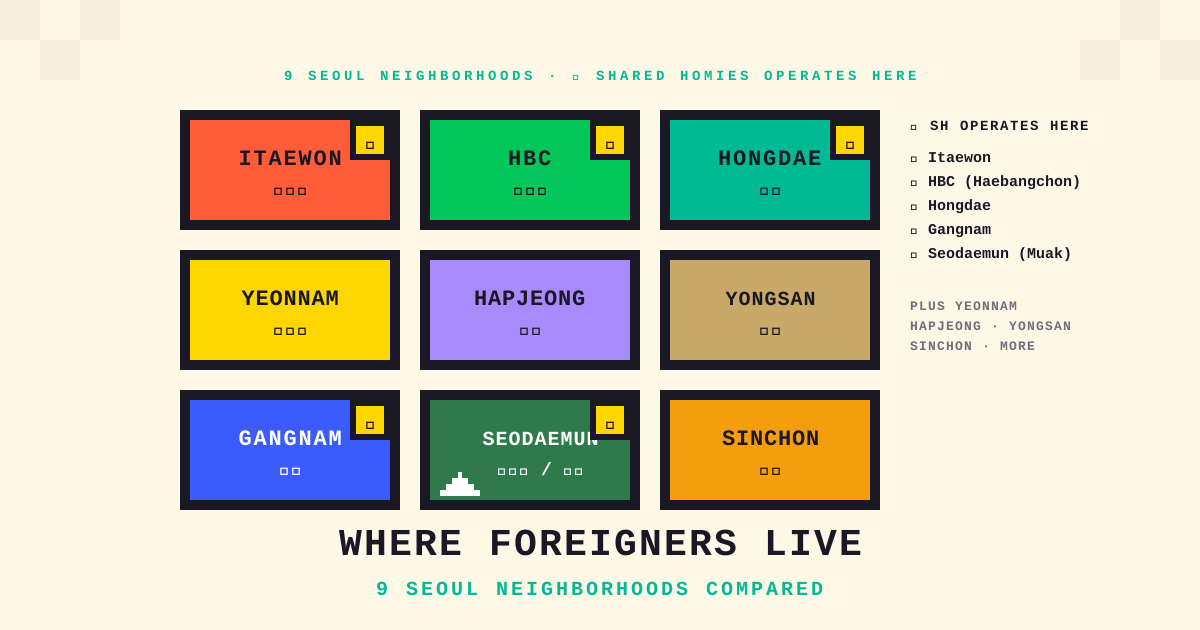
Best Seoul Neighborhoods for Foreigners: Itaewon, Hongdae, HBC, Gangnam, Yeonnam, Sinchon, Mapo & Yongsan
Eight Seoul neighborhoods that work for foreigners — what each costs, who lives there, what the vibe actually feels like, and how to pick.
10 min read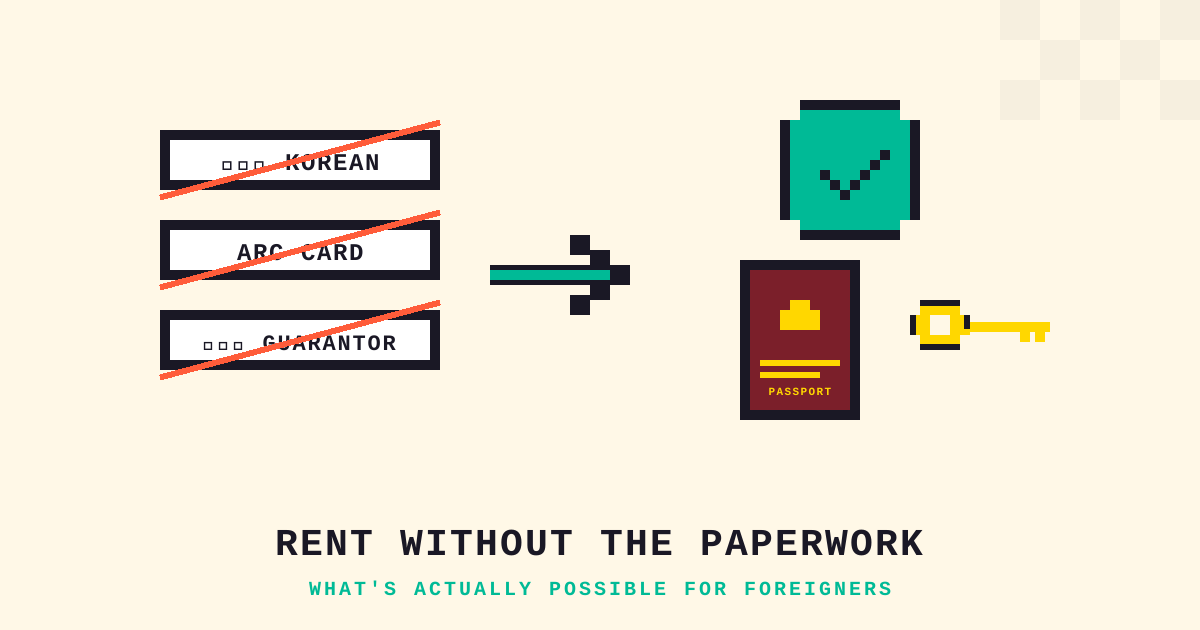
Renting in Seoul Without Korean, Without an ARC, Without a Guarantor — What's Actually Possible
The honest playbook for foreigners who don't have an ARC, Korean bank account, guarantor, or fluent Korean. What you can actually rent on day one — and what unlocks at each milestone.
10 min read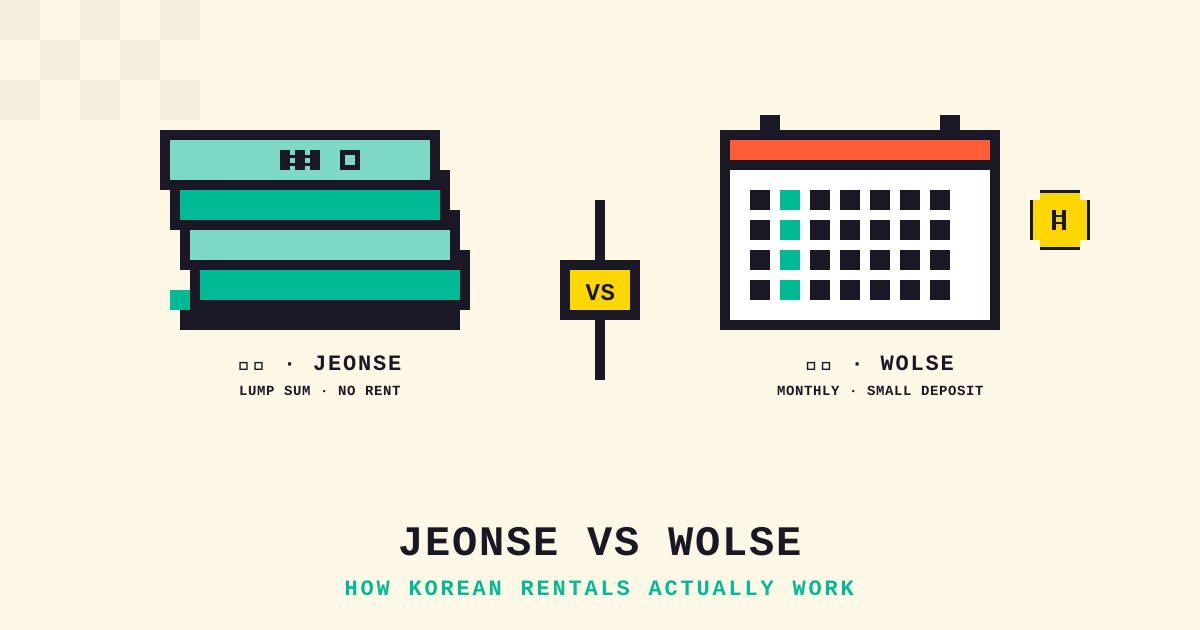
Jeonse vs Wolse vs Key Money: How Korean Rentals Actually Work
Korean rentals run on deposits, not monthly rent. Here's how jeonse, wolse, and key money actually work — and which ones a foreigner can sign.
7 min read